Infinite Gallery
Client galleries that handle 2,000+ images without the browser breaking a sweat. Windowed virtualization with progressive LQIP and responsive srcset, bounded DOM regardless of scroll depth.
ReactTypeScriptReact Query
Frontend
engineer
building
fast
&
well-crafted
web
products.
Five years shipping production web apps across fintech, logistics, and media-tech — design systems, Shadow-DOM component platforms, microfrontend architectures, and the kind of image-heavy frontend performance work I'm doing today at Aftershoot.
Pixels, bytes, and seconds — that's where the interesting frontend problems live.
I've spent the last five years learning that the browser is a stage for craft — and that the most interesting frontend problems rarely come from the framework layer. They come from the pixels, the bytes, and the seconds the user has to wait.
Today I'm SSE-1 at Aftershoot, leading frontend on the client gallery product where photographers deliver shoots of 2,000+ images to clients through branded web galleries. I re-architected the upload pipeline for a 28% throughput lift, built fault-tolerant retry for spotty venue wifi, and shipped Infinite Gallery — windowed virtualization with progressive image loading that keeps DOM bounded no matter how deep the scroll.
Before that: SDE 2 at Zeta, where I architected a Shadow-DOM business-component platform with runtime federation and SSR host hooks. And three and a half years at Delhivery building Orca-UI, the React component library powering their internal products, plus DispatchOne — their dispatch SaaS — and a React Native driver app shipped to both stores.
From enterprise trainee to leading frontend on a production media product.
Leading frontend for the Gallery product — the client gallery platform photographers use to deliver shoots of 2,000+ images. Re-architected the upload pipeline for a 28% throughput lift via parallel chunked uploads and backpressure-aware queueing. Shipped fault-tolerant retry (3× exponential backoff for spotty venue wifi) and Infinite Gallery — windowed virtualization with progressive LQIP and responsive srcset.
Architected a Shadow-DOM business-component platform with runtime federation and SSR host hooks — components self-bundled and version-isolated, dropping cleanly into Vue 2 or Vue 3 hosts with zero CSS bleed. Built Tenant Assets (per-tenant SSR delivery via isolated S3 + caching) and the Hercules Registry. Won the Shining Star Award in my first quarter.
Created Orca-UI — the React component library powering Delhivery's internal products in lockstep with the Aquarius Design System — plus @orca-ui/icons (validate → SVGO → SVGR → publish). Built DispatchOne, the dispatch SaaS; Routing, operations' synchronized map+list logistics tool; and a React Native driver app shipped to iOS + Android. Conducted 50+ technical interviews and mentored frontend hires.
Enhanced a space-management platform for a Fortune 500 client, tuning Java + SQL queries and backend workflows. Partnered with US-based engineering teams across time zones with structured handoffs and async reviews.
Production work shipped at Aftershoot and Delhivery.
Client galleries that handle 2,000+ images without the browser breaking a sweat. Windowed virtualization with progressive LQIP and responsive srcset, bounded DOM regardless of scroll depth.
A 28% throughput lift via parallel chunked uploads and backpressure-aware queueing, plus fault-tolerant retry with 3× exponential backoff for spotty venue wifi — because photographers shoot weddings, not in datacenters.
A runtime-federated component platform with SSR host hooks. Components self-bundle and version-isolate, dropping into Vue 2 or Vue 3 hosts with zero CSS bleed — turning tribal knowledge into a discoverable system.
The dispatch SaaS for Delhivery's logistics network. Web app for ops + a React Native driver companion app shipped to both stores. Real-time order tracking, route optimization, and a delivery workflow engine underneath.
Three personal builds — one live, two launching soon.

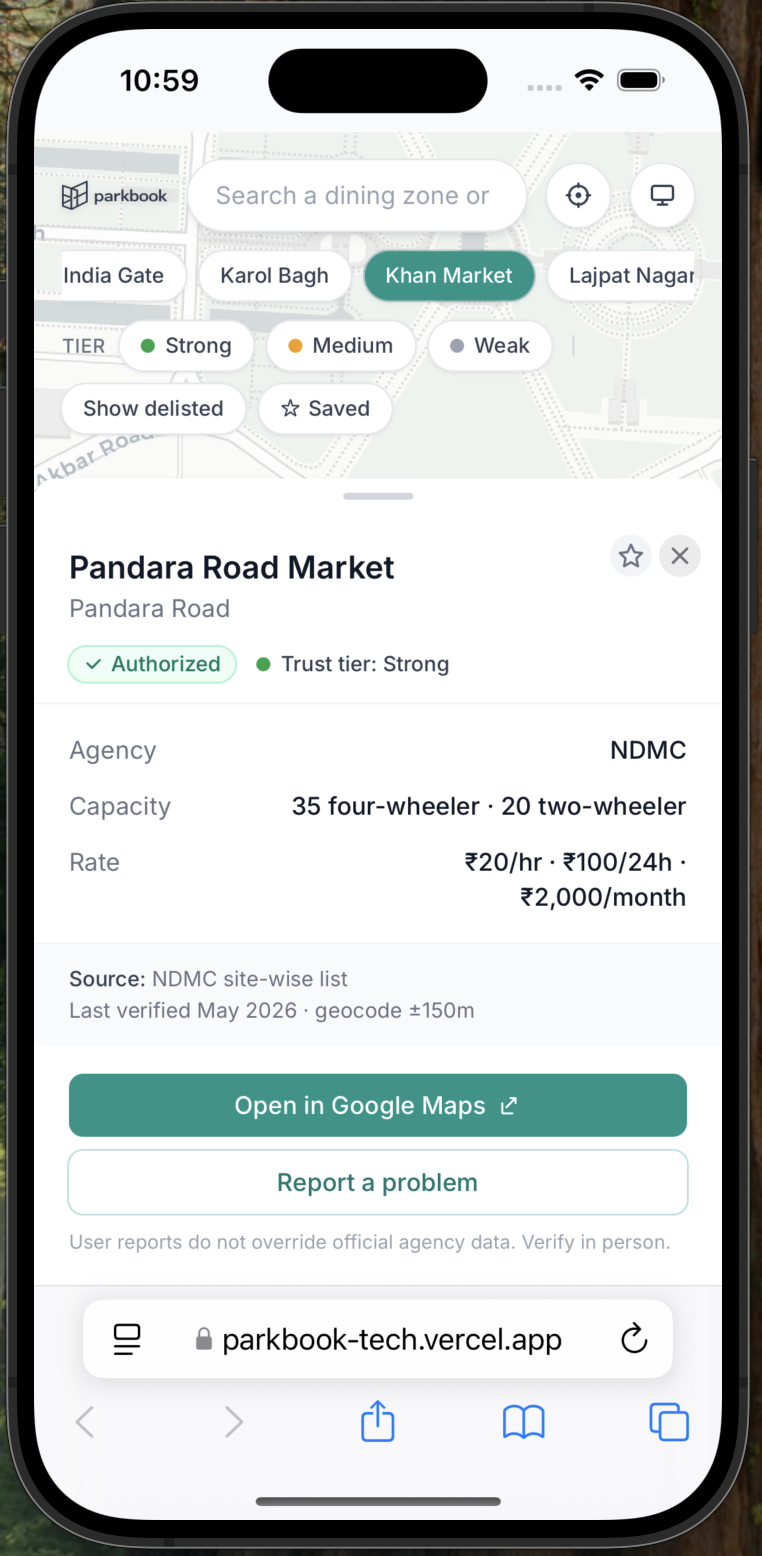
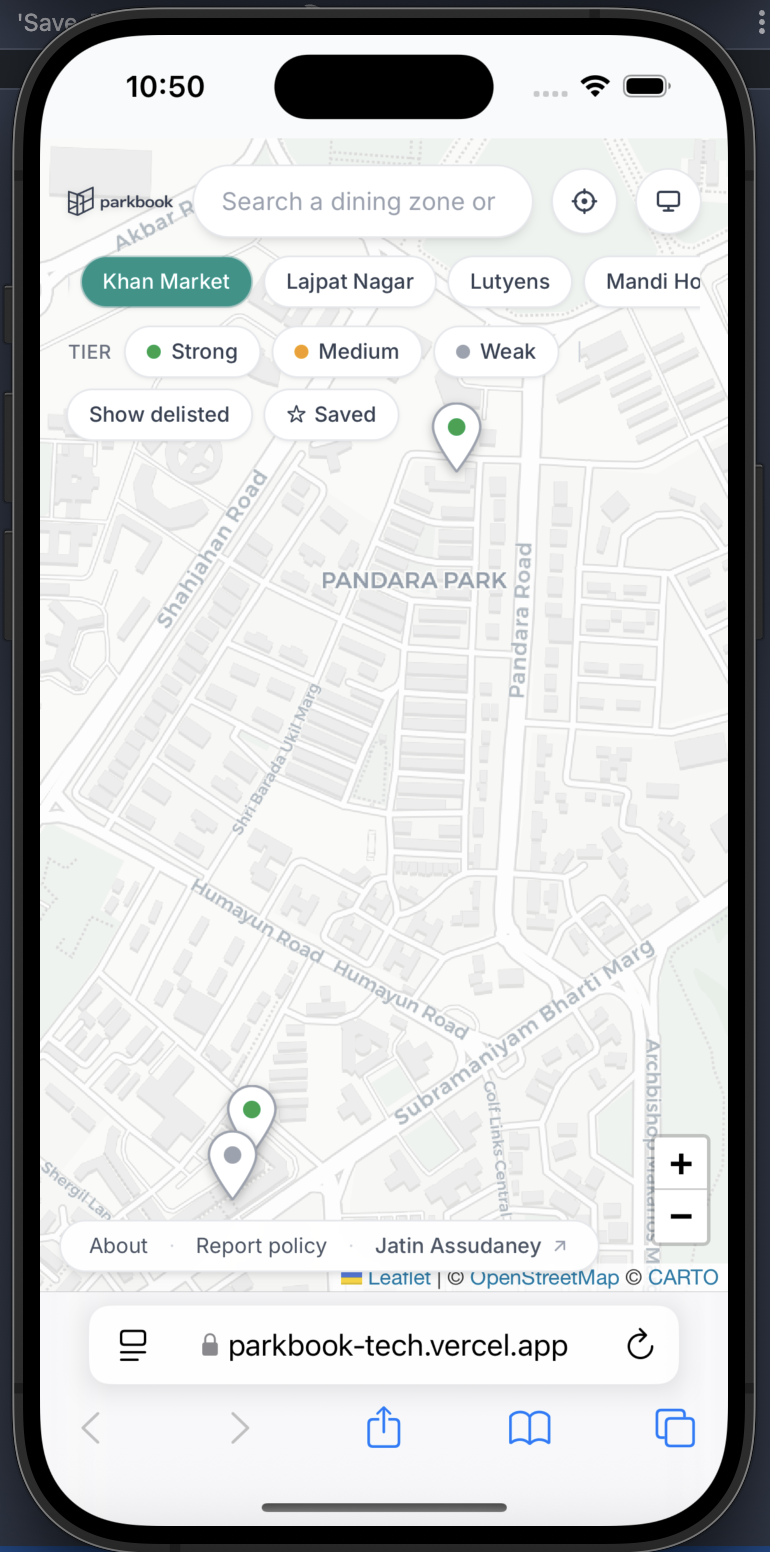
Authorized parking. Sourced, not guessed.
A map of Delhi's authorized parking lots — pulled from MCD, NDMC, DDA, DMRC, and the Delhi Traffic Police. Every lot carries a citation, a trust tier (strong / medium / weak), and a last-verified date. The pitch is trust, not real-time availability.
Where Google Maps shows everything (including the towed-truck-magnets), parkbook shows only what government data confirms is legitimate — and flags delisted lots with the actual police-circle letter reference so users know exactly why they shouldn't park there.

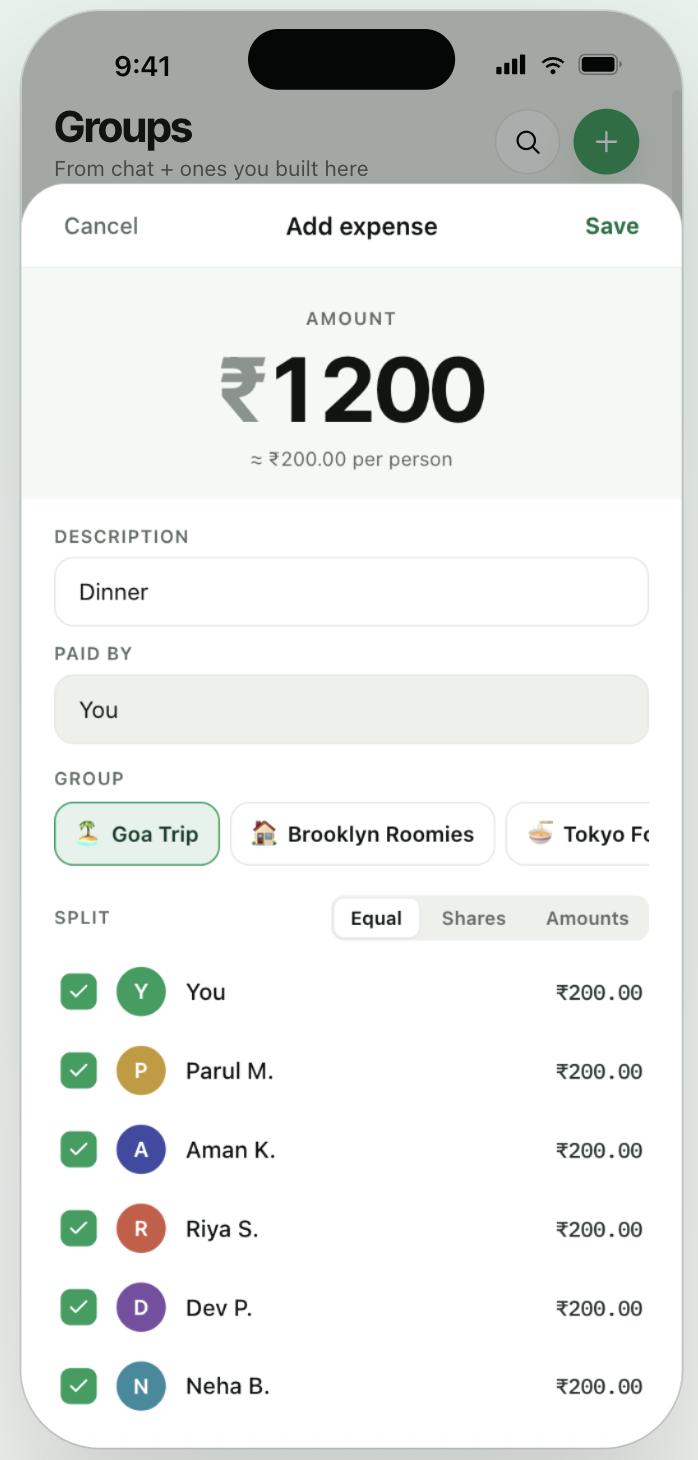
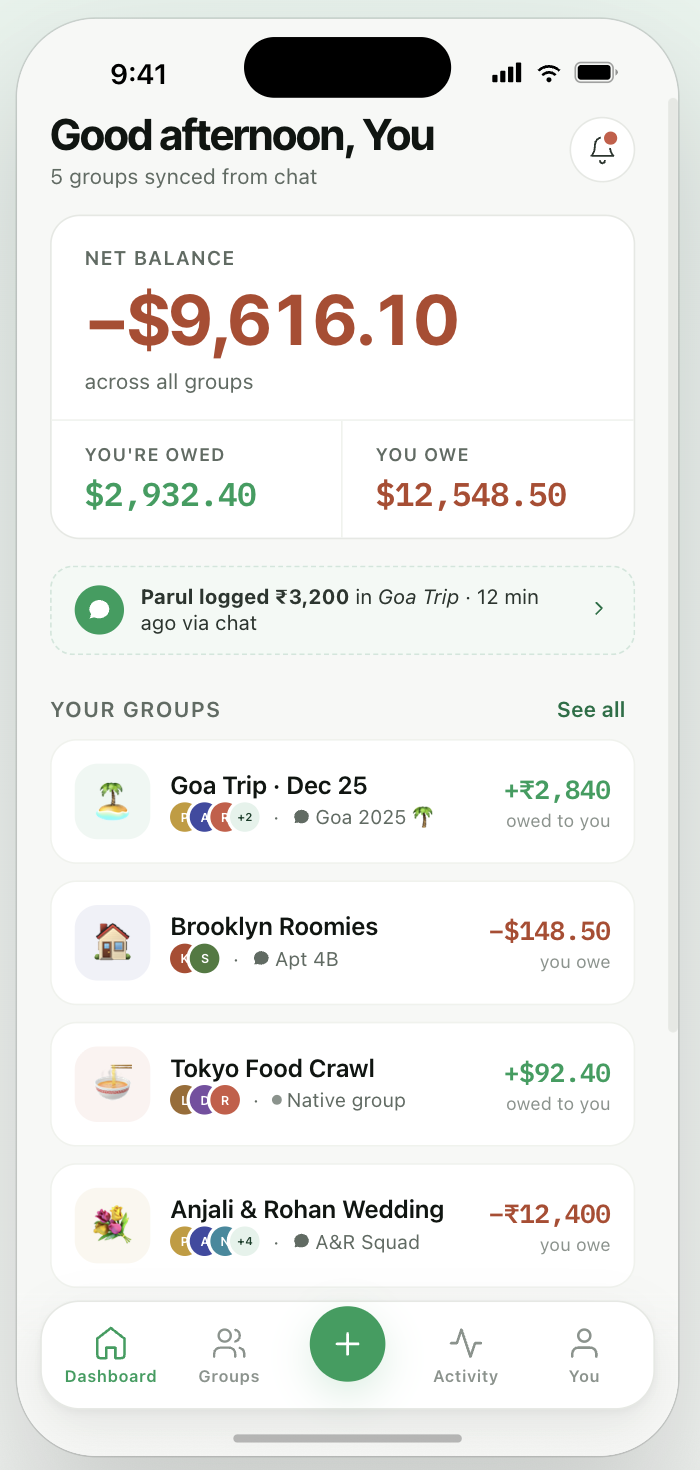
Split expenses. Just WhatsApp.
A full-featured group expense tracker with feature parity to Splitwise — create groups, log expenses, check balances, settle up — built as a web app and mobile app. The product itself is polished, but the real bet is the WhatsApp bot integration sitting on top.
Tag the bot in any group chat and it logs the expense, splits it, and updates everyone's balance — without anyone leaving the conversation. The friction of "open the app, log it, share it" is replaced by the chat that's already open.

Reclaim 10+ GB. In five minutes.
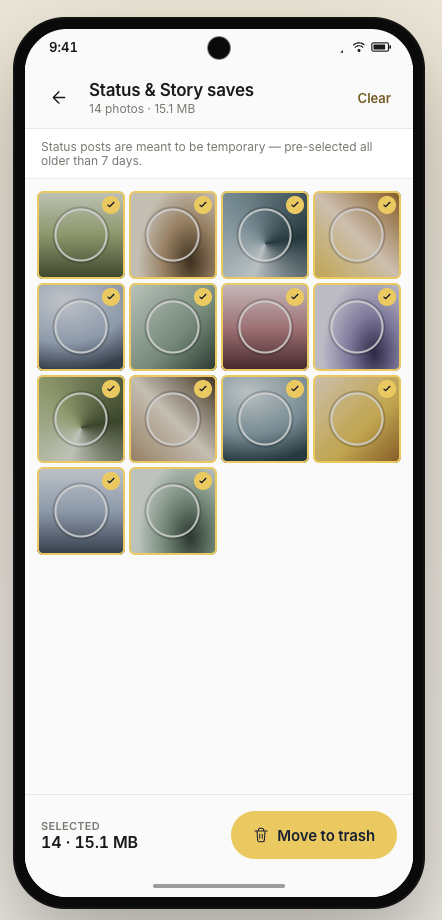
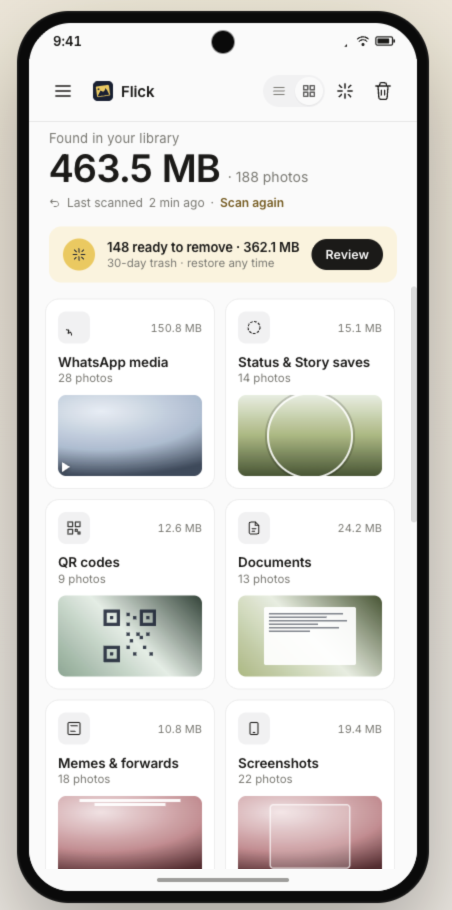
A storage-cleaner built for the Indian smartphone reality — where WhatsApp forwards, festival greetings, status saves, and viral memes quietly fill up galleries. Apple Photos, Google Photos, and Western cleaner apps don't address this category, because they weren't built for it.
Flick scans the library, auto-categorizes by source (WhatsApp media, Status saves, QR codes, memes, screenshots, documents), surfaces what's safe to remove, and lets users review by swipe — keep right, trash left — with a 30-day undo trash so nothing is ever truly lost. Designed for confidence, not anxiety.
Production stack — what I reach for, in roughly the order I reach for it.
Best reached by email. Slow on social. If we've talked before, ping me — I'll remember.